

If, as a homeowner, even after applying homemade ant bait, you continue seeing the ants, you’re not alone.
Usually, the first response you might take when you see a trail of ants is to act swiftly and prepare and apply a homemade ant bait.
However, it may not be working, as even after use, you may start seeing more ants. Therefore, in this post, we will discuss why your homemade ant bait may not be working and what you should do about it.
The Nature of Ant Colonies
To understand why your bait did not work, you must understand the ants’ organized colony structure. Recognizing that ant invasions involve highly organized colonies that require a systematic approach can help you in tackling the problem effectively.
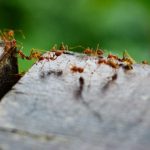
Usually, the ants that you see moving around are worker ants. Their sole responsibility is to forage for food and return to the nest to feed the colony, which includes the queen and the other workers.
Notably, the queen lays eggs, and so long as the queen lives, she will keep laying and replacing the worker ants you kill, making your efforts worthless. Therefore, any good ant bait should not only be used to eliminate the worker ants, but also to eliminate the queen and the remaining colony.
Why is Your Homemade Ant Bait Failing
Below are some reasons homemade ant baits usually don’t work.
1. Incorrect Ingredient Ratio
The most common homemade ant bait involves mixing boric acid, also known as borax, with a sweetener like sugar. Notably, borax is a slow-acting poison that allows worker ants to carry the toxin back to the nest before they eventually die.
However, if the bait is too concentrated, the worker ants are likely to die too early in the bait station, even before getting back to the nest. In such instances, the worker ants never return to the nest to spread the poisoned food throughout the colony and the queen.
On the other hand, if the concentration is too low, the ants are likely to consume it without lethal effect. Therefore, only by ensuring the proper formulation can you make an effective bait and reduce.
2. The Bait is Repellent, Not Attractive
Usually, ants have highly sensitive senses of smell and taste. Therefore, if the concentration of borax is even slightly off, they can detect it and avoid the bait altogether.
Then, they will find a safer food source in your home, completely ignoring the bait.
3. You’re Using the Wrong Kind of Bait
Usually, not all types of ants are attracted to the same ingredients. For instance, only the house ants prefer sweet-tasting baits. Other ants, such as the pharaoh ants, are more attracted to proteins and fats than to sugar.
Therefore, if you are not using the right bait ingredients for the specific type of ants, then the homemade ant bait may not work.
4. You’re Targeting and Killing the Worker Ants You See
Killing only the worker ants you see, without destroying the colonies, doesn’t work.
Usually, when those worker ants don’t return to the colony, more workers emerge through alternative openings, making it difficult to contain the infestation.
The Need for a Professional Ant Elimination Solution
When DIY efforts to eliminate ants fail, professional pest control offers a trusted and effective solution. Mainly, the experts understand the complexity of ant colonies and can reassure you that they are choosing a reliable way to eliminate pests efficiently.
Notably, the professionals understand how to disrupt the ants’ colonies effectively. They can accurately identify the ants, formulate baits with precision, strategically place them, and eliminate them within a few days.
Conclusion
Although homemade ant baits may seem like a quick and easy fix, they often prove short-lived. Therefore, if you’ve tried homemade ant baits and notice persistent trails, new colonies forming, or increased ant activity, these are signs that DIY methods are failing.
In such cases where homemade ant baits fail, call a professional for a thorough inspection and targeted treatment to prevent further infestation and save you time and frustration.